Markus Castro
DTI and DepEd Train Western Visayas Educators to Develop Young Agripreneurs
Table of Contents
Students in agricultural schools across Western Visayas are getting more opportunities to explore entrepreneurship through a joint initiative by the Department of Trade and Industry (DTI) and the Department of Education (DepEd).
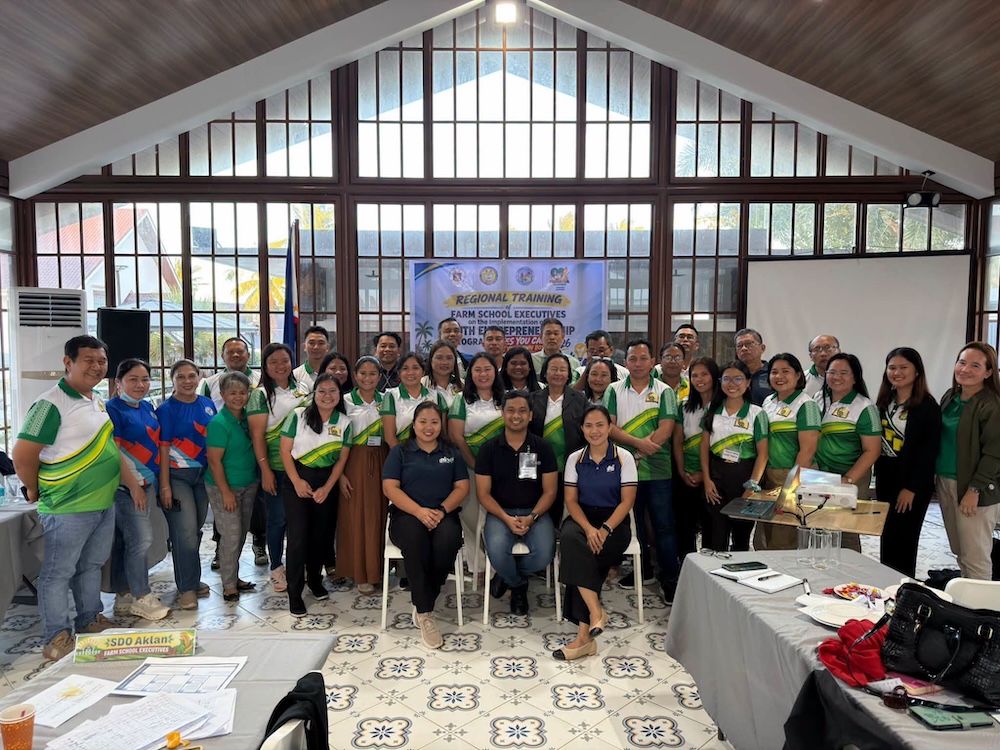
The two agencies are working together to help young Filipinos see agriculture not just as a livelihood, but also as an opportunity to build and manage their own businesses.
As part of this effort, DTI Region VI and DepEd Region VI conducted a four-day Training of Trainers (ToT) under the Youth Entrepreneurship Program (YEP). Held from October 26 to 29, 2026, at Playa de Paraiso in San Lorenzo, Guimaras, the training brought together 30 educators from across the region.
The participants included eight Technology and Livelihood Education (TLE) education program supervisors, 11 school heads, and 11 farm school coordinators. They were trained to introduce the “Yes, You Can Be Your Own Boss” (BYOB) framework to students and help them develop their entrepreneurial skills.
The initiative builds on an agreement signed last year by DTI Region VI and DepEd Region VI to incorporate practical business lessons into agricultural school curricula.
Turning Business Ideas Into Real Opportunities
During the training, DTI resource persons introduced educators to three learning modules designed to guide students through developing a business idea.
The first module, Track Think, focuses on developing an entrepreneurial mindset. Students learn about design thinking, problem-solving, and identifying market opportunities. The goal is to help them recognize potential business ideas and understand how they can address their communities’ needs.
The second module, Track Build, takes students through the basics of putting up and managing a business. Lessons cover enterprise planning, daily operations, basic financial management, teamwork, and the Business Model Canvas, a tool that helps organize and assess business ideas.
The final module, Track Pitch, teaches students how to present their business proposals. They learn to prepare pitch decks, explain their ideas, and receive feedback to improve their proposed ventures.
Together, the three modules provide a practical introduction to entrepreneurship, from identifying a promising idea to developing a business plan and presenting it to potential partners or investors.
Preparing Teachers to Inspire Future Entrepreneurs
The training went beyond presentations and classroom discussions. Educators also participated in teaching simulations, where they practiced delivering the lessons using learner-centered approaches.
These exercises introduced practical teaching techniques such as strategic questioning, visual aids, and constructive feedback. The activities were designed to help teachers make entrepreneurship lessons easier to understand and more engaging for students. In her message of support,
DTI Region VI Acting Regional Director Mutya D. Eusores emphasized the importance of partnerships between government agencies and other sectors in developing entrepreneurial skills among young people.
Building the Next Generation of Agripreneurs
Through the partnership, DTI and DepEd hope to encourage more students in Western Visayas to consider starting their own agricultural enterprises.
By giving teachers the right tools and knowledge, the agencies aim to bring business education closer to students and help them recognize opportunities within their local agricultural communities.
The program also highlights young people’s potential to contribute to the agriculture sector beyond traditional farming. With the right guidance, students can explore opportunities in food production, processing, marketing, and other agriculture-related businesses.
Ultimately, the initiative aims to help turn classroom ideas into viable enterprises while encouraging more young Filipinos to consider entrepreneurship as a path toward livelihood, innovation, and local economic development.
Follow us on Facebook and Twitter.
Read:
- The Matcha & Hojicha Collective Brings a Weekend of Sips and Finds to Eastwood City
- WHAT IS PAX SILICA? Everything You Need to Know About the Philippines’ First Rare Earth Processing Project
- From OFW to Farm Entrepreneur: How One Liliw Family Turned Coconuts Into a Thriving Business
- Filipino Beauty Brands Generate PHP 830 Million in Export Sales at Cosmoprof Asia 2026