Markus Castro
Is Brown Rice Better Than White Rice for People With Diabetes?
Table of Contents
Rice is a staple food in the Philippines. People commonly eat it at home, in restaurants, and in carinderias. For people with diabetes, choosing between brown rice and white rice can raise questions about nutrition, carbohydrates, and appropriate serving sizes.
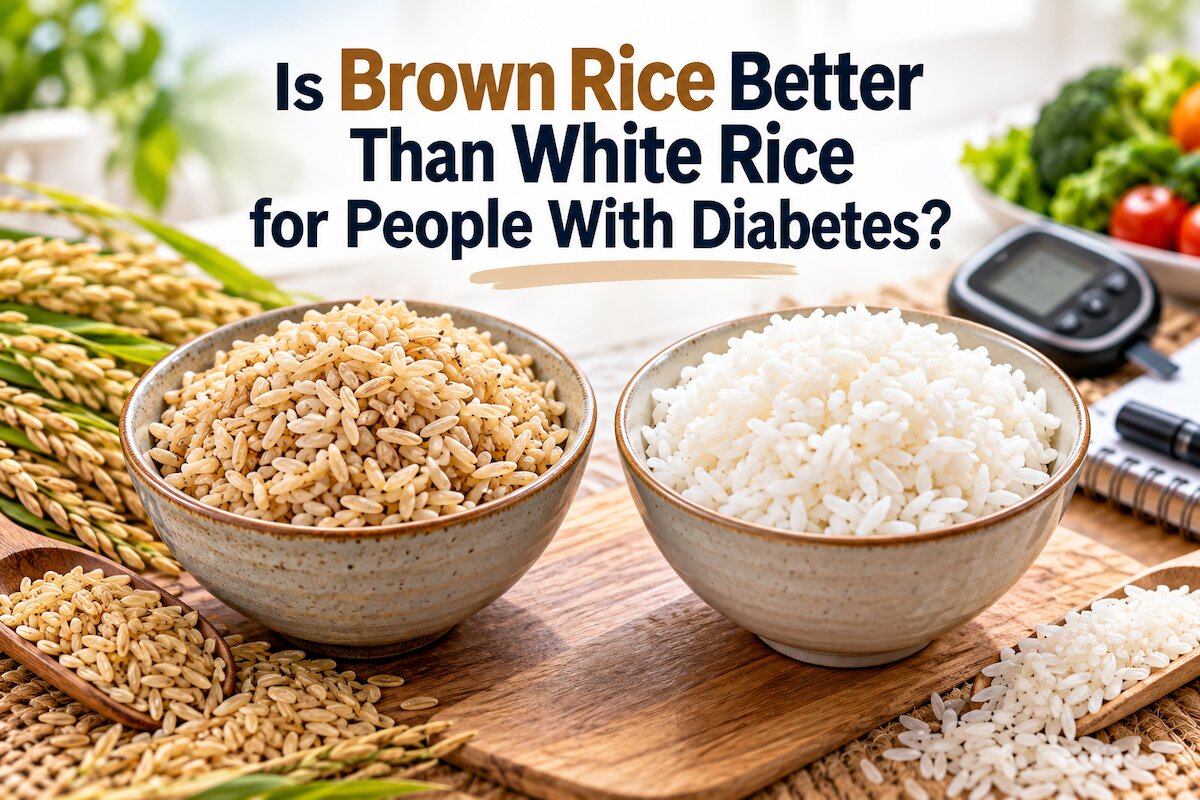
Both brown rice and white rice provide carbohydrates that fuel the body. They also contain protein, although neither is a major protein source compared with foods such as fish, eggs, meat, and legumes.
The main nutritional differences between these two types of rice come from how much of the grain remains after processing. Brown rice retains its bran and germ, while white rice removes these outer layers. This affects its overall nutritional composition.
However, choosing brown rice does not automatically make a meal suitable for everyone with diabetes. White rice can also fit into a balanced eating pattern. Understanding each serving’s carbohydrate content provides a useful starting point for comparison.
Brown Rice vs. White Rice Nutrition Facts
Brown rice and white rice have broadly similar carbohydrate contents when compared by cooked serving. Exact values depend on the variety, cooked weight, and how much water the rice absorbs during cooking.
The following estimates use typical cooked long-grain rice entries from standard food composition data. Half-cup and one-cup servings are measured after cooking.
| Cooked rice serving | Brown rice: total carbohydrates | Brown rice: protein | White rice: total carbohydrates | White rice: protein |
|---|---|---|---|---|
| ½ cup | 22.9 g | 2.5 g | 22.3 g | 2.1 g |
| 1 cup | 45.8 g | 5.0 g | 44.5 g | 4.3 g |
These figures are estimates for comparison, not exact measurements for every type of rice. Actual values can vary by rice variety and serving size.
Total Carbohydrates in Brown Rice and White Rice
Carbohydrates are important when planning meals for diabetes because the body breaks down many dietary carbohydrates into glucose. This glucose enters the bloodstream and contributes to blood sugar levels.
The total carbohydrate figure includes starches, sugars, and other carbohydrates counted in the food’s nutritional composition. Rice contains mostly starch, rather than large amounts of naturally occurring sugar.
For a practical comparison, half a cup of cooked brown rice provides approximately 23 grams of total carbohydrates. The same volume of cooked white rice provides approximately 22 grams.
A one-cup serving contains approximately 46 grams of carbohydrates in brown rice and 45 grams in white rice. These estimates show that the carbohydrate difference between the two options can be relatively small.
The amount served is therefore an important part of comparing rice choices. A larger serving of either type supplies more total carbohydrates than a smaller serving.
People who count carbohydrates as part of their diabetes care can use these estimates as a starting point. The most useful figure for an actual meal depends on the amount of rice served and the nutritional information available for that particular product or variety.
Protein Content of Brown Rice and White Rice
Protein helps the body build and maintain muscles, repair tissues, and perform essential functions. Rice provides some protein, but it is usually not the primary protein source in a meal.
A half-cup serving of cooked brown rice contains approximately 2.5 grams of protein, compared with around 2.1 grams in white rice. A one-cup serving provides approximately 5 grams in brown rice and 4.3 grams in white rice.
These differences are modest. Brown rice provides slightly more protein in the examples shown, but neither option provides much compared with many protein-rich foods.
Protein content alone does not determine which rice is more appropriate for someone with diabetes. Carbohydrate content, serving size, and the meal’s overall nutritional composition remain relevant.
Does Brown Rice Have Less Carbohydrates Than White Rice?
Brown rice does not necessarily have substantially fewer carbohydrates than white rice when both are compared in similar cooked portions. The table shows that their total carbohydrate contents are similar.
This distinction matters because some people assume brown rice is automatically low in carbohydrates. It is not. Brown rice remains a carbohydrate-rich grain, and people should consider its carbohydrates when planning meals.
The same principle applies to white rice. It is not necessary to treat every serving as unsuitable for someone with diabetes. You can estimate its carbohydrate content and include it in the person’s broader eating plan.
The most useful comparison is not simply which rice has fewer carbohydrates. It is how much carbohydrate a person consumes from the portion they actually eat.
Can People With Diabetes Eat Brown Rice?
People with diabetes can include brown rice in their meals if it fits their individual nutrition plan. Its retained bran and germ contribute to its nutritional profile, making it different from white rice beyond the carbohydrate and protein figures shown in the table.
However, brown rice is not a special food that can be eaten without considering portions. A large serving still contributes a substantial amount of carbohydrate.
People should also avoid assuming that switching to brown rice alone will control diabetes. Rice choice is only one aspect of nutrition, and the effect of a dietary change depends on the person’s overall eating pattern and diabetes management.
For people who prefer brown rice, the carbohydrate estimates can help them understand how much they are eating. Those who prefer white rice can use the same approach to estimate their portions.
Can People With Diabetes Eat White Rice?
White rice can also fit into a diabetes-conscious eating pattern. The key is to understand its carbohydrate content and consider serving sizes in the context of each person’s nutrition needs.
A half-cup serving of cooked white rice contains approximately 22 grams of carbohydrates, while a one-cup serving contains around 45 grams. These values make it easier to estimate rice’s contribution to a meal.
People should not assume they must eliminate white rice completely after a diabetes diagnosis. Dietary choices are more useful when they are based on accurate nutrition information and an eating plan suited to the individual.
Anyone advised to count carbohydrates can use serving estimates to plan meals. A registered dietitian or qualified diabetes care professional can provide more individualized guidance when needed.
Common Myths About Brown Rice and White Rice
Myth: Brown rice can be eaten in unlimited amounts because it is healthier.
Brown rice is not carbohydrate-free. In this example, a one-cup cooked serving contains about 46 grams of total carbohydrates. Larger portions increase total carbohydrate intake, even with brown rice. Its nutritional composition does not remove the need to consider serving size.
Myth: People with diabetes must completely avoid white rice.
White rice is not automatically forbidden for everyone with diabetes. A person may be able to include it within an individualized eating plan. Consider the carbohydrate content and portion size rather than treating the food as universally acceptable or universally prohibited.
Frequently Asked Questions
Is brown rice better than white rice for people with diabetes?
Brown rice and white rice have different nutritional profiles, but cooked servings of the same size have similar carbohydrate content. Brown rice retains more of the grain’s outer layers, while white rice has these layers removed. Don’t judge either option by its name alone. People with diabetes can compare serving sizes and carbohydrate estimates to understand how each choice fits their eating plan. Individual nutrition needs and preferences also matter.
How many carbohydrates are in half a cup of cooked brown rice?
In the example used in this article, a half-cup serving of cooked brown rice contains about 22.9 grams of total carbohydrates. This is a practical estimate, not an exact value for every variety. The actual amount can vary depending on the rice’s characteristics and its cooked weight. People who count carbohydrates can use this figure as a reference, then adjust their estimate if they have more precise nutritional information for the rice they eat.
How many carbohydrates are in one cup of cooked white rice?
In this example, a one-cup serving of cooked white rice contains about 44.5 grams of total carbohydrates. This estimate can help people understand how rice contributes to a meal’s carbohydrate content. Don’t treat this as a universal value for every rice variety or serving. Measuring the cooked portion consistently makes comparisons more useful, especially for people who need to estimate their carbohydrate intake as part of diabetes care.
Does brown rice contain more protein than white rice?
Brown rice generally provides slightly more protein than white rice in the serving examples shown here. Half a cup supplies approximately 2.5 grams of protein in brown rice and 2.1 grams in white rice. A one-cup serving provides around 5 grams and 4.3 grams, respectively. These differences are modest. Neither type of rice should be considered a major protein source, and protein content alone does not determine which option is appropriate for a person with diabetes.
Is white rice high in carbohydrates?
White rice is carbohydrate-rich because it is mostly starch. In this example, a half-cup serving of cooked white rice contains about 22.3 grams of total carbohydrates, while a one-cup serving contains about 44.5 grams. These amounts can help you estimate carbohydrate intake. Whether a serving fits an individual’s eating plan depends on their nutrition needs and how much they eat, not on the food’s carbohydrate content alone.
Is brown rice a low-carbohydrate food?
No. Brown rice still contains a substantial amount of carbohydrates. A one-cup cooked serving provides approximately 45.8 grams in the example used in this article. Although brown rice differs nutritionally from white rice, don’t treat it as a low-carbohydrate substitute. People with diabetes who monitor carbohydrate intake can use serving estimates to compare options and account for how much rice they actually consume.
Can people with Type 2 diabetes eat rice every day?
Some people with Type 2 diabetes may include rice regularly in their eating plans, but the appropriate amount varies by individual. The portion’s carbohydrate content, overall food intake, treatment plan, and personal nutrition needs all matter. Neither brown rice nor white rice automatically guarantees good blood sugar management. If you are unsure how much rice suits your needs, ask a registered dietitian or diabetes care professional for guidance tailored to your circumstances.
What is the difference between total carbohydrates and protein on a nutrition label?
Total carbohydrates show the amount of carbohydrate in a serving, including starches and sugars, as part of the food’s nutritional composition. Protein is a separate nutrient the body uses for functions such as tissue maintenance and repair. Nutrition labels usually list these values in grams. For rice comparisons, the carbohydrate figure is especially useful for people who monitor carbohydrate intake, while the protein figure adds information about the food’s nutritional composition.
Does brown rice contain fewer carbohydrates than white rice?
Not necessarily. In the cooked servings compared here, half a cup of brown rice contains approximately 22.9 grams of total carbohydrates, compared with 22.3 grams for white rice. One cup contains approximately 45.8 grams and 44.5 grams, respectively. These figures show that the difference can be small. Actual values vary with rice type and cooked serving weight, so it is more useful to compare consistent portions than to assume brown rice always contains fewer carbohydrates.
Should people with diabetes stop eating rice completely?
A diabetes diagnosis does not automatically mean that rice must be eliminated from the diet. Brown rice and white rice both provide carbohydrates, and either may fit into an individualized nutrition plan. The right serving depends on the person’s needs and overall eating pattern. People should avoid major dietary changes based on a single food comparison. If they need help estimating carbohydrate intake or planning meals, a qualified diabetes care professional can provide personalized advice.
Follow us on Facebook and Twitter.
Read:
- Diabetes and Filipino Street Food: What to Choose and What to Limit
- Walking for Diabetes: How Many Steps Should You Aim For?
- How to Reverse Prediabetes Through Healthy Filipino Lifestyle Habits
- Early Warning Signs of Diabetes Filipinos Should Never Ignore
- Diabetes Prevention Tips for Filipinos Over 40: A Complete Health Guide
- 10 Simple Habits Filipinos Can Adopt to Prevent Diabetes