Markus Castro
Don’t Make These Common Travel Insurance Mistakes
Table of Contents
Travel insurance can provide valuable protection against unexpected expenses, cancellations, medical emergencies, lost belongings, and travel disruptions. However, simply purchasing a policy does not automatically mean every problem during a trip will be covered.
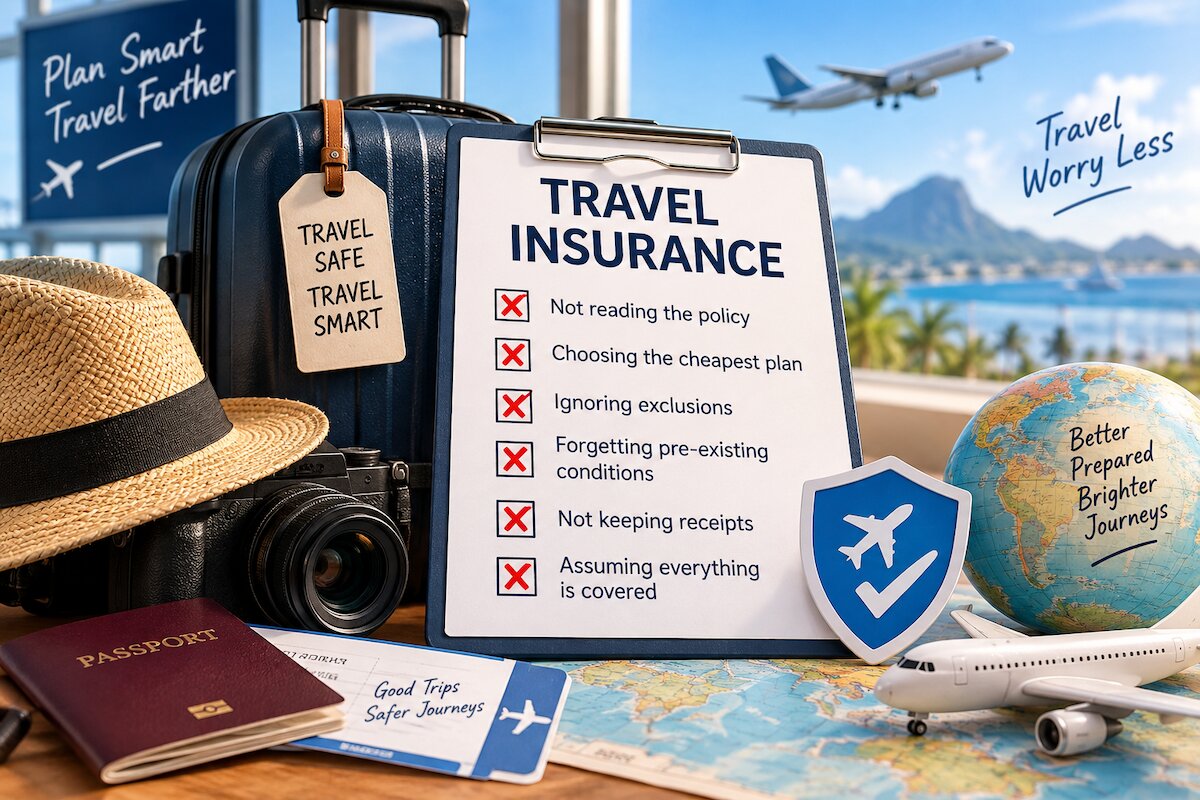
Many travelers make avoidable mistakes when choosing or using travel insurance. Some buy the cheapest policy without checking the coverage, while others fail to understand exclusions, medical requirements, or cancellation rules. Knowing these common mistakes can help travelers choose a policy that better matches their trip and avoid unpleasant surprises when making a claim.
1. Buying the Cheapest Travel Insurance Policy
Price is naturally an important consideration, especially for budget-conscious travelers. However, choosing a travel insurance policy solely because it is the cheapest can be a costly mistake.
Low-cost policies may have limited medical coverage, low reimbursement limits, significant exclusions, or fewer benefits for cancellations and delays. A policy that costs slightly more may provide substantially better protection.
Instead of comparing premiums alone, travelers should examine the coverage limits, deductibles, exclusions, emergency assistance, cancellation benefits, and claims process.
2. Not Reading the Policy Details
One of the most common travel insurance mistakes is purchasing a policy without reading what it actually covers.
Travelers often assume that a policy covers every unexpected event, but insurance policies contain specific conditions and exclusions. Some may cover trip cancellation for particular reasons but not simply because the traveler changes their mind.
Before buying travel insurance, read the policy wording carefully. Pay particular attention to covered reasons, exclusions, reimbursement limits, deductibles, documentation requirements, and deadlines for filing claims.
3. Waiting Until the Last Minute to Buy Insurance
Some travelers purchase travel insurance immediately before departure, while others wait until they have already started their trip.
Waiting too long can mean missing certain benefits. Depending on the policy, some coverage options or cancellation protections may apply only if insurance is purchased soon after an eligible trip booking.
Buying coverage early gives travelers more time to understand the policy and can provide protection against certain problems that occur before departure.
4. Assuming Pre-Existing Medical Conditions Are Automatically Covered
Travelers with existing medical conditions should never assume their standard travel insurance automatically covers them.
Some policies exclude pre-existing conditions entirely, while others may provide coverage only if specific requirements are met. Travelers may also need to disclose relevant medical information or purchase additional coverage.
Failing to understand these rules could result in a claim being rejected after a medical emergency overseas.
5. Ignoring Medical Coverage Limits
Medical treatment abroad can be extremely expensive, particularly in countries with high healthcare costs.
Travelers should check how much the policy covers for emergency medical treatment, hospitalization, ambulance services, and medical evacuation. A policy with a seemingly attractive price may have insufficient limits for a serious emergency.
Medical evacuation is particularly important for international travelers visiting remote destinations or countries where specialized medical facilities may be limited.
6. Assuming All Activities Are Covered
Adventure travelers should pay close attention to activity exclusions.
Standard travel insurance may not cover activities such as scuba diving, skiing, snowboarding, mountaineering, motorcycling, or certain extreme sports. Some policies cover these activities only if an additional option or upgraded plan is purchased.
Before participating in an activity, check whether it is specifically covered and whether there are conditions involving equipment, licensed operators, safety requirements, or maximum activity levels.
7. Forgetting About Travel Insurance Exclusions
Exclusions are just as important as the benefits listed in a policy.
Depending on the insurer and policy, exclusions may include alcohol-related incidents, reckless behavior, certain sporting activities, unattended baggage, specific medical conditions, or travel against official advice.
Travelers should review the exclusions before departure rather than discovering them while attempting to make a claim.
8. Not Keeping Receipts and Supporting Documents
Even when an incident is covered, travelers generally need evidence to support their claim.
Depending on the situation, this could include medical records, police reports, airline documentation, receipts, booking confirmations, proof of payment, photographs, or correspondence with transportation providers.
Keep important documents throughout the trip. Taking digital copies or photographs can also make it easier to provide evidence if original documents are lost.
9. Failing to Contact the Insurer During an Emergency
Another mistake is assuming travelers can simply pay for everything themselves and request reimbursement later.
Some policies require travelers to contact the insurer or its emergency assistance service as soon as possible, particularly in cases of hospitalization, medical evacuation, or other major incidents.
Before traveling, save the insurer’s emergency contact details in an easily accessible place. If an emergency occurs, follow the insurer’s instructions whenever circumstances allow.
10. Assuming Travel Insurance Covers Every Flight Cancellation
Travelers sometimes believe that any canceled or missed flight automatically qualifies for reimbursement.
Coverage depends on why the trip was canceled or interrupted. Covered reasons may include specific emergencies, illness, injury, severe weather, or other circumstances listed in the policy. Voluntarily deciding not to travel usually does not qualify unless the policy includes appropriate coverage.
Travelers should understand the difference between trip cancellation, trip interruption, travel delay, and missed connection benefits.
11. Overlooking Coverage for Lost or Delayed Baggage
Baggage protection can be useful, but it may have strict conditions and reimbursement limits.
Policies can impose per-item limits, overall baggage limits, depreciation rules, or exclusions for valuable items. Travelers may also need to report lost baggage to the airline or relevant authorities before submitting an insurance claim.
Keep receipts for expensive items when possible, especially if you may need to claim them later.
12. Not Checking Whether Existing Benefits Already Provide Coverage
Buying duplicate coverage is another common mistake.
Some credit cards, airline loyalty programs, bank accounts, or existing insurance policies may already include certain travel benefits. These could include travel accident protection, baggage coverage, trip cancellation benefits, or rental-car protection.
However, coverage varies considerably. Travelers should check the actual terms rather than assuming a credit card or existing policy provides comprehensive travel insurance.
13. Giving Inaccurate Information When Buying a Policy
Travel insurance applications should contain accurate information.
Incorrect travel dates, destination details, passenger information, medical disclosures, or other important information can create problems when filing a claim. Travelers should review their policy documents after purchase and make sure the information matches their actual trip.
If anything changes before departure, contact the insurer to determine whether the policy needs to be updated.
14. Forgetting That Insurance Has Limits
Travel insurance is designed to provide protection under specified circumstances, not to eliminate every financial risk associated with traveling.
Policies often contain maximum reimbursement amounts, deductibles, sublimits, waiting periods, and conditions. For example, baggage coverage may have a total limit as well as a smaller limit for individual items.
Understanding these limits helps travelers make realistic decisions about what risks they are actually protecting against.
15. Not Checking the Destination Requirements
Some destinations require travelers to have specific types or amounts of travel insurance, particularly for certain visa applications or specialized trips.
Travelers should check the current entry, visa, and insurance requirements for their destination before purchasing a policy. The insurance required for a visa may also differ from the broader coverage travelers might want for their trip.
16. Failing to Compare Policies
Travel insurance policies can differ significantly even when they appear to offer similar benefits.
Instead of choosing the first policy encountered, compare several options based on medical coverage, cancellation protection, baggage benefits, exclusions, deductibles, emergency assistance, and claim procedures.
The best policy is generally the one that provides appropriate protection for the specific trip rather than simply the one with the lowest premium.
17. Not Understanding the Claims Process
Travelers may carefully purchase insurance but never learn how to make a claim.
Before leaving home, find out how claims are submitted, what documents are required, how quickly claims must be filed, and how the insurer should be contacted during emergencies.
Knowing this information in advance can save significant time and stress when something goes wrong.
How to Avoid Travel Insurance Mistakes
A few simple steps can make travel insurance much more useful:
- Read the policy wording before purchasing.
- Compare coverage instead of looking only at price.
- Check medical coverage and evacuation limits.
- Understand pre-existing condition rules.
- Review exclusions carefully.
- Confirm coverage for planned activities.
- Purchase insurance early when appropriate.
- Keep receipts and important documents.
- Save the insurer’s emergency contact information.
- Understand cancellation and interruption conditions.
- Check whether existing credit cards or insurance provide overlapping benefits.
- Keep a copy of the policy accessible during the trip.
Final Thoughts
Travel insurance can be an important part of trip planning, but travelers need to understand what they are actually buying. The most expensive mistake is often not paying too much for insurance—it is discovering after an emergency that the policy does not cover the situation.
Taking time to compare policies, understand exclusions, check coverage limits, and keep proper documentation can make it much easier to use travel insurance when it is genuinely needed.
Frequently Asked Questions
1. What is the most common travel insurance mistake?
One of the most common mistakes is buying a policy without understanding its coverage and exclusions. Travelers may assume that travel insurance covers every cancellation, medical problem, lost item, or travel disruption, but policies only cover specific circumstances outlined in their terms. Before purchasing, travelers should review covered events, exclusions, limits, deductibles, and claim requirements. Spending a few minutes understanding the policy can prevent significant financial surprises if something goes wrong during the trip.
2. Is the cheapest travel insurance always the best option?
No. The cheapest travel insurance policy may provide less comprehensive protection, lower medical limits, smaller baggage benefits, or more exclusions. Travelers should compare policies based on the protection they actually need rather than focusing exclusively on the premium. Medical coverage, emergency evacuation, trip cancellation, travel delays, baggage protection, deductibles, and exclusions can all affect a policy’s value. A slightly more expensive policy may offer substantially better protection for a particular destination or type of trip.
3. When should I buy travel insurance?
Travelers should generally consider buying travel insurance soon after making significant nonrefundable travel bookings, particularly if they want protection for eligible pre-trip cancellation risks. The ideal timing depends on the insurer and the policy, as some benefits have purchase-time requirements. Buying early also gives travelers time to read the policy, identify exclusions, and resolve questions before departure. Waiting until an emergency has already occurred, or until coverage is no longer available for a particular risk, will not provide protection for that event.
4. Does travel insurance cover pre-existing medical conditions?
Pre-existing medical conditions are not automatically covered by every travel insurance policy. Some insurers exclude them, while others may offer coverage subject to specific eligibility requirements, disclosures, waiting periods, or additional premiums. Travelers with ongoing or prior medical conditions should carefully review the policy’s medical section before purchasing. They should also provide accurate information when required. Assuming that a standard travel insurance policy covers every medical situation can result in a rejected claim during an overseas emergency.
5. Does travel insurance cover canceled flights?
Travel insurance can cover certain financial losses associated with flight cancellations, but coverage depends on the reason for the cancellation and the policy’s terms. A traveler voluntarily deciding not to fly may not qualify for reimbursement, while specific covered circumstances may qualify for trip cancellation, interruption, delay, or missed-connection benefits. Travelers should also understand what compensation they may receive directly from the airline or transportation provider. Checking both sets of rights and benefits can help prevent duplicate or unexpected claims.
6. Does travel insurance cover lost luggage?
Many travel insurance policies provide some protection for lost, stolen, or delayed baggage, but the amount and conditions vary. Policies may have an overall baggage limit, a separate limit for individual belongings, deductibles, and exclusions for particular valuables. Travelers may also need to report baggage problems to the airline or appropriate authorities and obtain documentation. Keeping receipts or other proof of ownership for expensive belongings can make it easier to demonstrate their value when submitting an eligible claim.
7. Does travel insurance cover adventure activities?
Not necessarily. Activities such as skiing, scuba diving, mountaineering, motorcycling, and other adventure sports may be excluded from standard travel insurance or covered only under certain conditions. Travelers planning an activity-focused vacation should check the policy’s sports and activities section before purchasing. Some insurers offer additional coverage for specific activities. Travelers should also check requirements involving licensed guides, safety equipment, designated areas, experience levels, and other conditions that could affect whether a claim is covered.
8. What documents should I keep for a travel insurance claim?
Travelers should keep documents that demonstrate what happened, what they paid, and why they are entitled to a benefit. Depending on the claim, this could include receipts, booking confirmations, medical records, police reports, airline correspondence, baggage reports, proof of payment, and photographs. It is also useful to retain the insurance policy and claim instructions. Keeping digital copies in secure storage can provide an additional backup if original documents are lost while traveling.
9. Should I use travel insurance from my credit card?
Credit cards can sometimes offer travel-related insurance benefits, but the coverage may be narrower than that of a dedicated travel insurance policy. Benefits can depend on how the trip was paid for, the type of card, the destination, and the specific terms. Travelers should read the card’s insurance documentation before relying on it. Compare medical coverage, evacuation protection, cancellation benefits, baggage coverage, exclusions, and claim procedures with those offered by standalone travel insurance.
10. What should I do if I need to make a travel insurance claim?
Contact the insurer as soon as reasonably possible and follow the instructions provided in the policy. For serious medical emergencies, travelers should use the insurer’s emergency assistance service when appropriate, particularly when hospitalization or evacuation is involved. Keep all relevant receipts and supporting documents, and obtain reports from airlines, police, hospitals, or other organizations when applicable. Submit the claim within the required deadline and provide accurate information. Understanding the claims procedure before departure can make the process considerably easier.
Want more stories like this? Follow us on Facebook and Twitter.
Read: 7 Things You Need To Know About General Insurance