Markus Castro
For many Filipinos, street food is more than a quick and affordable snack. It is part of everyday life—from fish balls and kwek-kwek after school to grilled barbecue on the way home, isaw during a night out, or taho on a busy morning.
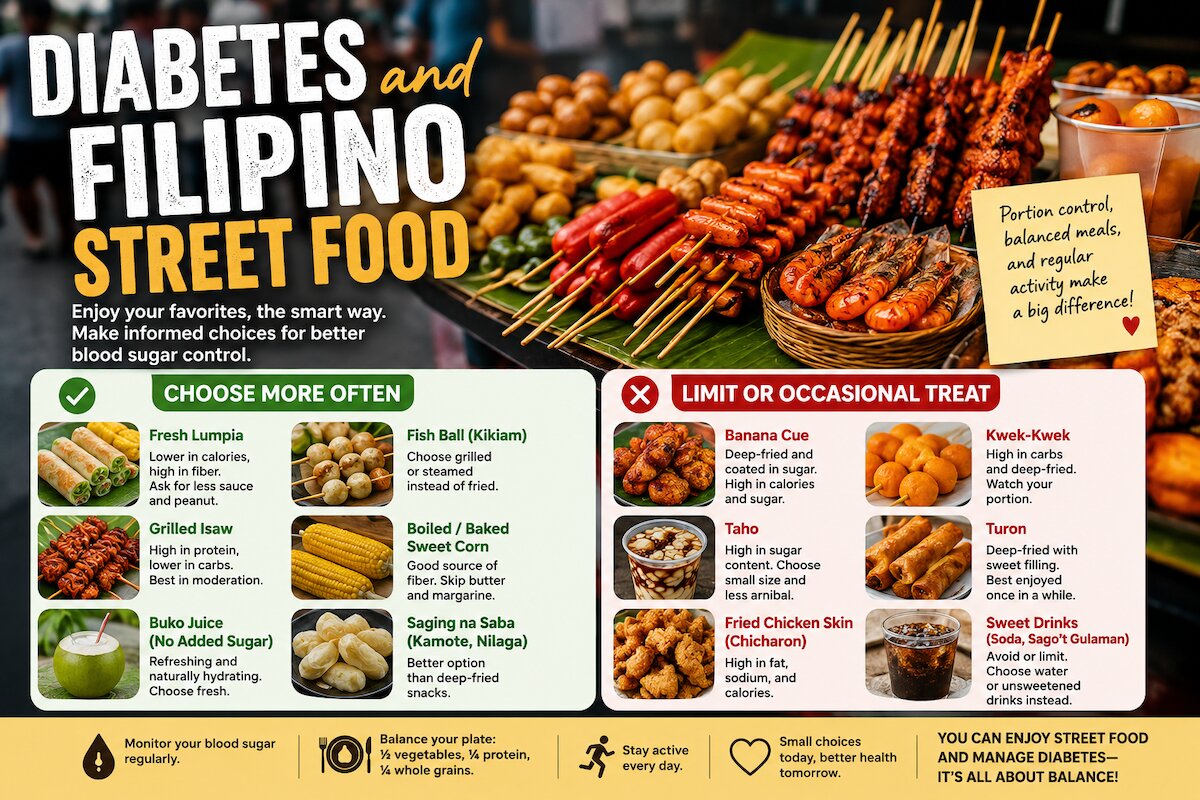
Having diabetes does not automatically mean giving up Filipino street food. The key is learning how different foods affect blood sugar, choosing better options when available, controlling portions, and being mindful of sauces and drinks.
People with diabetes do not necessarily need to eliminate carbohydrates completely. Instead, the amount and type of carbohydrates matter, and pairing carbohydrate-containing foods with protein, vegetables, and other nutrient-dense foods can help create a more balanced meal.
Why Street Food Can Be Challenging for People With Diabetes
Table of Contents
The biggest challenge with Filipino street food is that many popular choices are deep-fried, highly processed, carbohydrate-heavy, salty, or served with sweet sauces.
A small snack can also become a much larger meal when several items are eaten together. For example, a serving of fish balls followed by kwek-kwek, a sweetened drink, and dessert can provide considerably more carbohydrates and added sugar than expected.
Portion size is especially important because carbohydrate-containing foods can raise blood glucose. The American Diabetes Association recommends a meal pattern that emphasizes non-starchy vegetables, lean protein, and appropriately portioned quality carbohydrates.
This does not mean every street-food stall is off-limits. It simply means you need to be more selective.
Filipino Street Foods You Can Choose More Often
1. Grilled Fish
Grilled fish can be one of the better street-food choices because fish provides protein without the carbohydrate load found in breaded or battered snacks.
Choose simply grilled fish when available and be cautious with sweet marinades or sauces. If the fish is heavily glazed with a sugary sauce, ask for less sauce or eat only a small amount.
2. Grilled Chicken
Grilled chicken can also be a practical choice, particularly when compared with deep-fried chicken.
Choose pieces without excessive skin and avoid heavily sweetened sauces. If you’re eating it as a meal, pair it with vegetables when available rather than adding several fried side dishes.
3. Chicken or Pork Barbecue in Moderation
Filipino barbecue can fit into a diabetes-conscious eating plan, but preparation matters.
Barbecue marinades can contain sugar, while commercial sauces may add even more. Choose a smaller serving, remove visible excess fat when practical, and avoid repeatedly dipping the meat in sweet sauce.
If barbecue is your main meal, focus on the protein rather than turning the meal into a combination of barbecue, rice, sugary drinks, and fried snacks.
4. Taho—with Modifications
Taho is a popular Filipino breakfast and merienda, but the arnibal can add a substantial amount of sugar.
If you want taho, consider asking for less arnibal or skipping some of it. The tofu provides protein, while the sweet syrup contributes added sugar.
For people taking insulin or certain diabetes medications, individual carbohydrate needs can vary considerably, so portion choices should align with the meal plan provided by their healthcare professional.
5. Fresh Fruit
Fresh fruit sold by vendors can be a better snack than many deep-fried street foods.
However, fruit still contains carbohydrates, so portion size matters. Choose whole fruit rather than fruit drinks or preparations heavily coated with sugar.
The American Diabetes Association recommends whole, minimally processed foods and notes that fruits can be part of a diabetes-friendly eating pattern.
6. Boiled Corn in a Reasonable Portion
Boiled corn provides carbohydrates, fiber, and other nutrients. The key is portion control, particularly if you are also eating rice or other carbohydrate-rich foods during the same meal.
Think of corn as your carbohydrate serving rather than automatically adding it to an already carbohydrate-heavy meal.
Street Foods to Limit
1. Fish Balls
Fish balls are inexpensive, convenient, and everywhere, but they are typically processed and fried. The sweet sauces commonly served with them can also add sugar.
If you enjoy fish balls, keep the serving small and go easy on the sauce. Better yet, choose grilled protein when it is available.
2. Kwek-Kwek and Tokneneng
Kwek-kwek and tokneneng are popular Filipino street-food favorites, both coated in batter and deep-fried.
The eggs themselves provide protein, but the batter adds carbohydrates, and the frying increases the food’s calorie and fat content.
You do not necessarily have to eliminate them completely. A small serving occasionally is different from making them a regular, large snack.
3. Isaw
Isaw is grilled rather than deep-fried, which may initially make it seem like an obvious healthy choice. However, the nutritional profile depends on the type, preparation, portion, and accompanying sauces.
Because isaw is an organ-based food, hygiene and proper cooking are particularly important. Choose vendors with good food-handling practices and make sure the food is thoroughly cooked.
4. Banana Cue
Banana cue combines bananas with caramelized brown sugar and oil. While bananas themselves can be part of a balanced diet, the added sugar and preparation make banana cue a food to enjoy sparingly if you’re managing blood glucose.
Consider fresh fruit instead when you want something sweet.
5. Turon
Turon is another Filipino favorite that combines banana, wrapper, oil, and often caramelized sugar.
The combination makes it relatively carbohydrate- and calorie-dense. A small serving occasionally may fit into an individual’s meal plan, but it is not the best everyday snack for someone trying to manage blood glucose.
6. Camote Cue
Camote itself is a nutritious source of carbohydrates, but the traditional street-food preparation often involves added sugar and frying.
If you want sweet potato, a plain boiled or steamed version without added sugar is generally a better choice.
7. Sweetened Drinks
One of the easiest things to overlook is the beverage.
Street-food meals are often accompanied by soft drinks, sweetened iced tea, fruit drinks, milk tea, or other sugar-sweetened beverages. These can add a large amount of sugar and carbohydrates without making you feel particularly full.
The American Diabetes Association recommends avoiding sugar-sweetened beverages when possible and choosing water or other zero-calorie beverages instead.
For Filipinos with diabetes, choosing water is one of the simplest changes that can make a street-food meal more diabetes-friendly.
What About Street-Food Sauces?
Sauces can make a surprisingly big difference.
Sweet chili sauce, banana ketchup, barbecue sauce, sweet-and-sour sauce, and other dipping sauces may contain added sugar. You do not have to avoid sauces altogether, but consider using less.
Instead of repeatedly dipping every bite, use a small amount on the side. This gives you more control over how much you consume.
Remember that a food labeled “sugar-free” is not necessarily carbohydrate-free. Looking at the total carbohydrate content is more useful when evaluating packaged foods.
A Better Way to Eat Filipino Street Food
You don’t have to approach street food with an all-or-nothing mindset.
Try these practical strategies:
Choose grilled over deep-fried
When you have a choice between grilled chicken or fish and battered, deep-fried food, grilled protein is generally the better option.
Control the portion
Instead of ordering several servings, choose one favorite item and keep the portion modest.
Don’t combine too many carbohydrates
If you are already eating rice, you may not need several additional carbohydrate-heavy snacks such as kwek-kwek, banana cue, and a sweetened drink.
Skip the sugary beverage
Choose water, unsweetened tea, or another low- or no-calorie beverage.
Add vegetables when possible
If you’re turning street food into a full meal, look for vegetables or other high-fiber foods to create a more balanced plate.
Eat slowly
Eating quickly can make it harder to recognize when you’re full. Take your time and pay attention to portions.
Know your personal blood glucose response
Different people can respond differently to the same food. Keeping track of what you eat and discussing your blood glucose patterns with your diabetes care team can help you understand what works for you.
A Simple Filipino Street-Food Guide
| Street Food | Better Approach |
|---|---|
| Grilled fish | Choose more often; watch sauces |
| Grilled chicken | Good protein option; limit sweet marinades |
| Barbecue | Small portion; go easy on sweet sauce |
| Taho | Less arnibal |
| Fresh fruit | Reasonable portion |
| Boiled corn | Watch portion if eating other carbs |
| Fish balls | Small serving; limit sweet sauce |
| Kwek-kwek | Occasional small serving |
| Tokneneng | Occasional small serving |
| Isaw | Small portion; choose hygienic vendors |
| Banana cue | Limit because of added sugar |
| Turon | Limit because of sugar and frying |
| Camote cue | Prefer plain boiled or steamed camote |
| Soft drinks | Best avoided or minimized |
| Sweetened iced tea | Limit; choose unsweetened |
| Water | Best everyday beverage |
Can People With Diabetes Still Enjoy Filipino Street Food?
Yes. Diabetes management does not mean that you have to completely abandon the foods you grew up eating.
The goal is to develop a sustainable eating pattern. A diabetes-friendly diet can include carbohydrates; key considerations include portion size, carbohydrate quality, added sugars, and how foods fit into your overall meal plan.
For many Filipinos, the most realistic approach is not “never eat street food again.” Instead, think: choose better, eat less, and balance the meal.
For example, choosing grilled chicken, a small portion of rice, vegetables, and water is very different from having several servings of fried street food alongside a sugary drink.
The Bottom Line
Filipino street food can still have a place in a diabetes-conscious lifestyle. The trick is knowing which foods to prioritize and which ones to enjoy only occasionally.
Choose grilled fish, grilled chicken, modest portions of barbecue, fresh fruit, and less-sweet options when available. Limit deep-fried foods, heavily battered snacks, sugary desserts, sweet sauces, and sugar-sweetened beverages.
Most importantly, remember that there is no single “diabetes diet” that works for everyone. Your carbohydrate requirements and meal plan may depend on factors such as your medications, activity level, body size, and overall health. A doctor or registered dietitian can help create a plan that fits your needs. (American Diabetes Association)
Street food is part of Filipino culture. Living with diabetes doesn’t necessarily mean giving it up—it means learning how to enjoy it more mindfully.
This article is for general health information and is not a substitute for individualized medical advice. People with diabetes should consult their doctor or registered dietitian for personalized nutrition and medication guidance.
Follow us on Facebook and Twitter.