Markus Castro
PhilHealth 101: Understanding Coverage, Eligibility, Benefits, Contributions, and Claims in the Philippines
Table of Contents
Medical emergencies can happen when you least expect them. Whether it’s a sudden illness, an accident, surgery, or the birth of a child, healthcare expenses can quickly add up. For many Filipino families, these costs can become a significant financial burden. This is why having PhilHealth coverage is more important than ever.
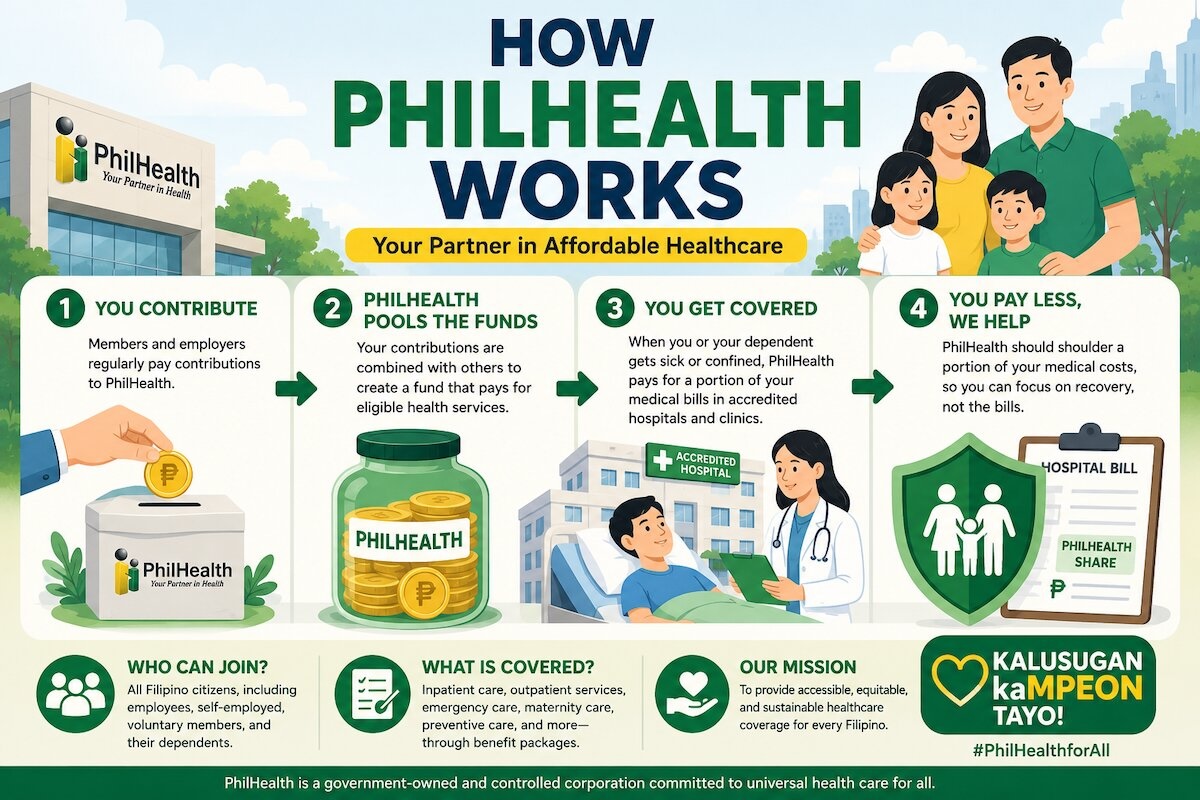
The Philippine Health Insurance Corporation, more commonly known as PhilHealth, serves as the country’s national health insurance provider. Through the Universal Health Care (UHC) Act, every Filipino is automatically entitled to health insurance coverage, giving millions of citizens access to financial assistance for hospitalization, medical procedures, preventive care, and various healthcare services.
However, despite being one of the country’s most important government agencies, many Filipinos still have questions about how PhilHealth works. Who needs to pay contributions? What illnesses are covered? How much financial assistance can members receive? How do you file a claim? What happens if you’re unemployed, self-employed, or an overseas Filipino worker?
This comprehensive guide explains everything you need to know about PhilHealth, from membership and eligibility to benefits, contributions, and claims, so you can maximize your healthcare coverage whenever you need it.
What Is PhilHealth?
PhilHealth is a government-owned and controlled corporation tasked with administering the National Health Insurance Program (NHIP). Its primary mission is to ensure that every Filipino has access to affordable, quality healthcare without having to shoulder the full cost of medical treatment.
Instead of paying the entire hospital bill yourself, PhilHealth helps shoulder a portion of eligible medical expenses. Depending on the illness or procedure, the financial assistance may cover consultations, laboratory tests, professional fees, medicines, surgery, hospitalization, and other healthcare services.
PhilHealth is one of the pillars of the country’s Universal Health Care system, working alongside public hospitals, private hospitals, healthcare providers, local government units, and accredited clinics to improve healthcare access nationwide.
Its long-term goal is to reduce out-of-pocket healthcare expenses while encouraging Filipinos to seek medical treatment earlier instead of delaying care due to financial concerns.
Understanding the Universal Health Care (UHC) Act
One of the biggest changes in Philippine healthcare came with the implementation of the Universal Health Care Act (Republic Act No. 11223).
Before the law took effect, Filipinos generally needed to register first before becoming PhilHealth members. Today, all Filipino citizens are automatically included in the national health insurance program.
This means every Filipino is entitled to healthcare benefits, although the way contributions are paid depends on their employment status or membership category.
The Universal Health Care Act also shifted PhilHealth’s focus beyond hospitalization. Today, preventive healthcare, primary care consultations, disease screening, vaccinations, and maintenance treatment have become equally important parts of the healthcare system.
Instead of waiting until people become seriously ill, the government encourages early detection and preventive treatment to improve overall public health.
Who Can Become a PhilHealth Member?
Nearly every Filipino belongs to one of PhilHealth’s membership categories.
Understanding your membership classification is important because it determines who pays your contributions and what requirements may apply.
1. Employees
Employees working in government agencies and private companies automatically become PhilHealth members.
Their monthly contribution is shared between the employee and employer, with payroll deductions handled by the employer.
Employees generally don’t need to worry about making separate payments as long as their employer regularly remits contributions.
2. Self-Employed Individuals
Business owners, entrepreneurs, freelancers, consultants, online sellers, professionals, and gig workers are considered self-employed members.
Since they do not have employers making contributions on their behalf, they are responsible for paying their PhilHealth premiums according to the applicable contribution schedule.
Examples include:
- Doctors
- Lawyers
- Architects
- Accountants
- Grab drivers
- Online freelancers
- Influencers
- Content creators
- Small business owners
- Market vendors
3. Overseas Filipino Workers (OFWs)
Millions of OFWs remain covered by PhilHealth while working abroad.
This includes:
- Seafarers
- Domestic workers
- Healthcare workers
- Engineers
- Skilled workers
- Professionals
Maintaining active membership allows OFWs to continue receiving benefits whenever they seek treatment in the Philippines.
4. Indirect Contributors
Some Filipinos receive PhilHealth coverage even without personally paying monthly contributions.
Their premiums are subsidized by the national government.
Examples include:
- Senior citizens
- Indigent families
- Persons with disabilities (PWDs)
- Sponsored members
- Qualified beneficiaries of government social programs
This ensures that vulnerable sectors continue receiving healthcare assistance regardless of income.
5. Lifetime Members
Individuals who have paid the required number of PhilHealth contributions before retirement become Lifetime Members.
One of the biggest advantages is that they no longer need to pay monthly premiums while continuing to enjoy PhilHealth benefits for life.
Who Can Be Declared as Your PhilHealth Dependents?
Qualified members may register eligible family members as dependents.
These typically include:
- A legal spouse who is not separately covered by PhilHealth
- Legitimate, illegitimate, adopted, or stepchildren below 21 years old who are unmarried and unemployed
- Children aged 21 years or older with permanent disabilities that prevent self-support
- Parents aged 60 years and above who are not PhilHealth members
- Qualified foster children under existing regulations
Keeping dependent records updated is essential because inaccuracies can delay the processing of benefits when medical care is needed.
What Healthcare Services Does PhilHealth Cover?
One of the most common misconceptions about PhilHealth is that it only pays for hospitalization.
In reality, the national health insurance program covers a wide range of healthcare services, from preventive care to treatment for catastrophic illnesses.
1. Hospitalization Benefits
Hospital confinement remains one of PhilHealth’s primary benefits.
Depending on the patient’s diagnosis and treatment, PhilHealth may help cover:
- Hospital room charges
- Board and lodging
- Medicines
- Medical supplies
- Laboratory examinations
- X-rays
- CT scans
- MRI scans
- Diagnostic procedures
- Professional fees
- Operating room charges
- Nursing services
The amount covered depends on the approved benefit package for the illness or procedure.
2. Emergency Medical Care
Medical emergencies are often unexpected and financially overwhelming.
PhilHealth provides assistance for emergency admissions involving:
- Road accidents
- Workplace injuries
- Heart attacks
- Stroke
- Severe infections
- Trauma
- Fractures
- Other life-threatening conditions
Patients admitted through emergency rooms may still qualify for PhilHealth benefits if treated at accredited healthcare facilities.
3. Outpatient Benefits
PhilHealth has expanded beyond inpatient care to include outpatient healthcare services.
Covered services may include:
- Medical consultations
- Selected laboratory tests
- Diagnostic examinations
- Minor surgical procedures
- Day surgeries
- Preventive healthcare
This encourages Filipinos to seek treatment before illnesses become more serious.
4. Maternity Care
Pregnant women may receive financial assistance throughout pregnancy and childbirth.
Coverage may include:
- Prenatal consultations
- Laboratory examinations
- Normal spontaneous delivery
- Cesarean delivery
- Newborn care
- Postpartum care
These benefits encourage safer deliveries in accredited healthcare facilities while helping reduce maternity-related expenses.
5. Surgical Benefits
PhilHealth provides assistance for many medically necessary surgical procedures.
Coverage depends on:
- Complexity of surgery
- Medical diagnosis
- Hospital classification
- Applicable benefit package
Minor outpatient surgeries and major operations may qualify for different benefit levels.
6. Dialysis Benefits
Kidney disease remains one of the country’s most expensive chronic illnesses.
PhilHealth provides assistance for eligible dialysis treatments, helping patients significantly reduce recurring treatment costs.
7. Cancer Treatment
Cancer care can involve surgery, chemotherapy, radiation therapy, targeted treatments, and long-term monitoring.
PhilHealth has expanded financial support for several cancer-related treatment packages to help reduce the financial burden on patients and their families.
8. Catastrophic Illness Packages
PhilHealth also provides specialized benefit packages for serious diseases requiring prolonged or highly specialized treatment.
These may include selected cases involving:
- Heart disease
- Stroke
- Tuberculosis
- HIV/AIDS
- Kidney disease
- Certain cancers
- Severe infectious diseases
- High-risk medical conditions
Coverage depends on the approved benefit package and clinical eligibility.
Understanding the PhilHealth Konsulta Package
One of PhilHealth’s most important healthcare programs is the Konsulta Package, which shifts the focus from treating illness to preventing it.
Instead of waiting until hospitalization becomes necessary, members are encouraged to register with an accredited Konsulta provider for regular primary healthcare.
The package generally includes:
- Initial health assessment
- Medical consultations
- Routine check-ups
- Blood pressure monitoring
- Selected laboratory tests
- Preventive screening
- Health education
- Maintenance medicines for qualified conditions
- Referrals to specialists when needed
This program promotes early detection of chronic diseases such as hypertension, diabetes, and high cholesterol, reducing the likelihood of costly hospital admissions later on.
How PhilHealth Computes Benefits
Many first-time members assume PhilHealth pays a fixed percentage of the hospital bill. In reality, the system primarily uses case rates and benefit packages.
A case rate is a predetermined amount assigned to a specific illness or procedure. For example, common medical conditions, surgeries, and childbirth each have corresponding benefit amounts.
For certain illnesses covered under special packages, PhilHealth may provide a fixed benefit based on the approved package rather than the actual amount billed by the hospital.
If your total hospital bill exceeds the PhilHealth benefit, you will generally need to pay the remaining balance unless other government assistance programs, private insurance, or hospital policies apply.
Understanding this system helps set realistic expectations before admission.
How to Use Your PhilHealth Benefits
To enjoy your benefits smoothly, members should follow these general steps:
- Ensure your PhilHealth membership details are updated.
- Verify that your chosen hospital, clinic, dialysis center, or healthcare provider is accredited by PhilHealth.
- Present your PhilHealth Identification Number (PIN) or other required membership information during admission or registration.
- Submit any additional documents requested by the healthcare facility.
- Allow the hospital to process the PhilHealth deduction from your eligible charges.
In many accredited hospitals, PhilHealth benefits are deducted automatically before discharge, making the billing process more convenient.
How to File a PhilHealth Claim
While many accredited hospitals process claims directly, there are instances where members may need to submit claims themselves.
The process generally involves:
- Completing the required claim forms, if applicable
- Preparing medical records, hospital documents, and billing statements
- Providing proof of membership or identification when required
- Submitting complete requirements within the prescribed filing period
- Waiting for PhilHealth’s evaluation and processing
The specific requirements may vary depending on the nature of the claim, the type of healthcare service received, and whether the healthcare provider is accredited.
Tips to Maximize Your PhilHealth Benefits
Getting the most from PhilHealth isn’t just about being a member. It also involves staying informed and keeping your records current.
Here are some practical tips:
- Keep your personal information, employment details, and dependents updated.
- If you’re a voluntary or self-employed member, pay your contributions on time to maintain eligibility under applicable rules.
- Register with a PhilHealth Konsulta provider and take advantage of preventive healthcare services.
- Always confirm that your healthcare provider is PhilHealth-accredited before receiving treatment.
- Ask your hospital’s billing office how much of your expected expenses PhilHealth will cover before undergoing a procedure.
- Retain copies of medical records, receipts, and hospital documents, as these may be needed for certain claims or future reference.
Frequently Asked Questions
Is PhilHealth membership mandatory?
Yes. Under the Universal Health Care Act, all Filipino citizens are automatically covered by the national health insurance program. Contribution obligations depend on your membership category.
Can unemployed Filipinos become PhilHealth members?
Yes. Those who are not covered through employment or government-funded categories may register under the appropriate membership classification and pay the required premiums if applicable.
Can senior citizens receive PhilHealth benefits without paying monthly contributions?
Qualified senior citizens are generally covered as indirect contributors, with their premiums funded by the government, subject to existing PhilHealth policies.
Can OFWs continue using PhilHealth while working abroad?
Yes. OFWs remain eligible for PhilHealth benefits and can use them when receiving covered healthcare services in the Philippines, provided they meet the applicable membership requirements.
Can I use PhilHealth together with an HMO or private health insurance?
Yes. PhilHealth is typically applied first to eligible hospital charges. Any remaining balance may then be covered by your HMO or private insurance, depending on the terms of your policy.
Final Thoughts
PhilHealth remains one of the most valuable healthcare safety nets available to Filipinos. Beyond helping reduce hospital bills, it now plays a broader role in promoting preventive care, primary healthcare, and financial protection against unexpected medical expenses. From routine consultations and maternity care to emergency treatment and specialized care for chronic illnesses, PhilHealth provides meaningful support at different stages of a person’s healthcare journey.
To make the most of your membership, keep your records up to date, understand the benefits available under your membership category, and seek care from accredited healthcare providers. By familiarizing yourself with how PhilHealth works—including its coverage, eligibility rules, contribution requirements, and claims process—you can better prepare for future healthcare needs and avoid unnecessary financial stress when medical situations arise.
Follow us on Facebook and Twitter.
Read: 10 DOH-Approved Herbal Medicines You Should Know