Markus Castro
Fake PWD ID Warning Signs: Verification Guide, Philippine Laws, and Penalties
Table of Contents
The Persons with Disability (PWD) Identification Card allows qualified Filipinos with disabilities to access benefits and privileges under Philippine law. These include statutory discounts on eligible purchases and services, subject to applicable rules. The card also serves as proof of entitlement when presented to participating establishments.
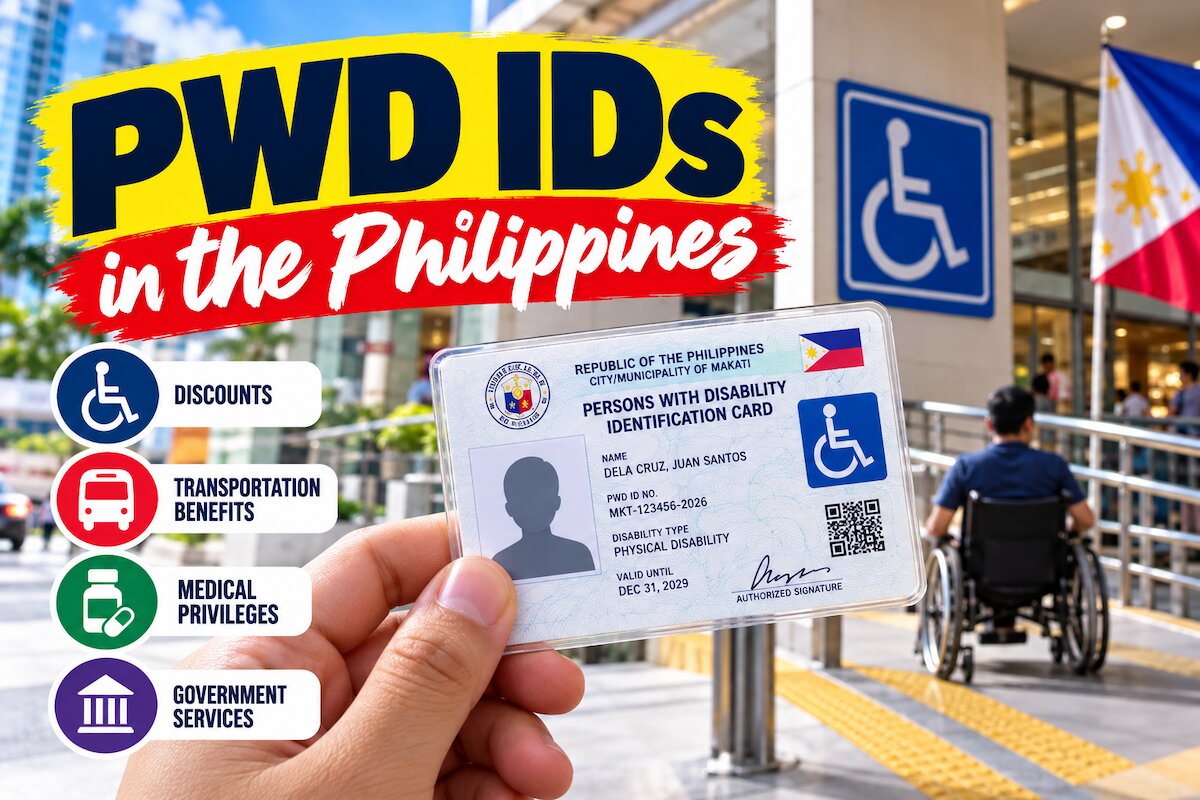
However, fraudulent claims, altered identification cards, and the misuse of PWD privileges can undermine a system designed to support people who face additional expenses and accessibility barriers.
Knowing how to verify and spot fake PWD IDs helps consumers, restaurant operators, hotel managers, retailers, pharmacists, and other service providers protect legitimate beneficiaries while reducing the risk of fraud.
The process requires care. A suspicious-looking card does not automatically prove fraud, and a person’s disability may not be visible. Businesses should rely on appropriate verification procedures, official records where available, and confirmation from the issuing authority rather than assumptions about someone’s appearance.
This guide explains the warning signs of potentially fraudulent PWD IDs, how to verify a card responsibly, what Philippine laws provide, and how establishments can handle questionable documents without discriminating against people with disabilities.
What Is a PWD ID in the Philippines?
A PWD ID is an identification card issued through authorized government channels to qualified persons with disabilities. Under established procedures, the city or municipal Persons with Disability Affairs Office (PDAO) or the City or Municipal Social Welfare and Development Office (C/MSWDO) generally handles applications and issuance.
The National Council on Disability Affairs (NCDA) provides national policy guidance and standards in coordination with other government agencies.
The legal framework includes the following laws and issuances:
- Republic Act No. 7277, or the Magna Carta for Persons with Disability, as amended.
- Republic Act No. 9442, which expanded PWD privileges and introduced protections against ridicule and vilification.
- Republic Act No. 10754, which further expanded benefits and privileges for persons with disabilities.
- NCDA Administrative Order No. 001, Series of 2021, which established guidelines for PWD ID issuance.
- NCDA Administrative Order No. 001, Series of 2026, which institutionalizes and implements the Unified Persons with Disabilities Identification System.
These measures establish the framework for legitimate registration, identification, and access to benefits. The 2026 order introduces a unified system with standardized records and secure verification features, with implementation proceeding in phases. Its provisions should not be interpreted as meaning every existing PWD ID already supports live digital verification.
How to Verify a PWD ID in the Philippines
The most reliable approach is to verify the document through the appropriate issuing office or an authorized verification facility. Visual inspection can identify possible irregularities, but it cannot conclusively establish whether an ID is genuine.
1. Examine the information on the card
Check the visible details for consistency. Depending on the card’s format, these may include:
- The cardholder’s complete name.
- Photograph.
- PWD identification number.
- Type or classification of disability, if displayed.
- Issuing city or municipality.
- Issuing office or authorized official’s details.
- Date of issuance and validity information, where applicable.
Look for spelling errors, inconsistent formatting, unusual spacing, missing information, or details that appear altered.
Remember that legitimate cards may differ in appearance because of issuance dates, local government practices, and changes to national standards. A layout difference alone does not prove a card is fake.
2. Check the issuing local government office
The issuing PDAO or C/MSWDO is the best place to start when an establishment needs to confirm a card’s authenticity.
With a legitimate business purpose and in accordance with applicable privacy requirements, contact the relevant office and ask whether it can authenticate the card or confirm its issuance status.
Use contact information published by the local government or listed on an official government website. Avoid relying solely on telephone numbers or social media accounts printed on a questionable card.
A local government office may need to follow its own procedures before disclosing information. It should not release confidential disability records simply because a business requests them.
3. Use official digital verification features when available
The NCDA’s 2026 administrative order establishes a Unified Persons with Disabilities Identification System that includes a unique alphanumeric identification number, a photograph, and a QR code or barcode for secure verification. The order also describes a phased implementation process.
If a card has a QR code or barcode, use the official verification facility provided or authorized by the issuing government office.
Check that the result matches the presented card and that the system confirms its status. Be cautious if a QR code opens an unrelated website, redirects to an unfamiliar domain, or displays information inconsistent with the physical ID.
Important: A QR code is not proof of authenticity by itself. It can be copied or manipulated. Likewise, a failed scan does not automatically prove fraud because the system may be unavailable, the card may predate digital features, or the issuing office may not yet be integrated into the unified system.
Do not enter personal information into an unfamiliar website just to check a card.
4. Confirm the card’s validity and status
Check any expiration date or validity information displayed on the card. If the card appears expired, damaged, or inconsistent with current records, ask the issuing office to clarify its status.
Do not assume every PWD ID has the same validity period. Older cards, replacement cards, and cards issued under updated guidelines may be subject to different rules. The NCDA’s 2026 order establishes lifetime validity for permanent disabilities under the unified system and provides for periodic revalidation in specified cases involving non-apparent disabilities, subject to its implementation rules.
An old card should not automatically be classified as fake. Verification must account for the applicable issuance rules and transition arrangements.
5. Check the identification number with the issuing authority
A number printed on a card may look convincing even when it has been fabricated or copied. When an appropriate verification system is available, confirm that the number matches a legitimate record.
If you can’t verify the card electronically, contact the issuing office and ask about its approved manual verification process.
Avoid using unofficial online lists, social media posts, or publicly shared spreadsheets of PWD identification numbers. Such sources may contain inaccurate information and expose sensitive personal data.
6. Handle discrepancies discreetly
If the photograph, name, or other information appears inconsistent, speak to the cardholder privately and respectfully. Ask for clarification rather than immediately accusing the person of fraud.
When necessary, explain that the establishment must confirm the document’s validity through its standard procedure.
Do not publicly display the cardholder’s information, photograph the ID for personal distribution, or post allegations on social media. PWD identification details may reveal sensitive personal information protected under the Data Privacy Act of 2012.
If the matter remains unresolved, consult the issuing office about the appropriate next step.
7. Know What You Cannot Verify by Appearance Alone
One of the most important safeguards against wrongful accusations is recognizing that many disabilities are not immediately visible.
A person may have a psychosocial disability, a chronic condition, a learning disability, a rare disease, or another qualifying disability without showing obvious physical signs. Some people can walk independently but still experience substantial limitations in daily activities.
The following observations are not sufficient proof that a PWD ID is fraudulent:
- The cardholder appears physically healthy.
- The cardholder can walk, stand, or perform certain activities without assistance.
- The disability is not obvious to other customers.
- The cardholder is young or appears capable of working.
- The person does not use a wheelchair, cane, or other mobility aid.
A person’s appearance, occupation, age, or ability to perform one particular activity cannot establish whether the person qualifies for PWD benefits.
Businesses should verify the identification document through appropriate official procedures. They should never demand that a cardholder publicly disclose a diagnosis or demonstrate a disability to justify presenting a valid ID.
Common Warning Signs of a Potentially Fake PWD ID
The following indicators may justify further verification. None should be treated as conclusive proof of fraud on its own.
1. Altered or inconsistent personal information
Names, identification numbers, dates, or other details may show signs of erasure, overwriting, inconsistent printing, or digital manipulation.
2. Photograph that does not match the cardholder
A substantial mismatch between the photograph and the person presenting the card warrants clarification. Consider legitimate changes in appearance and the quality or age of the photograph.
3. Missing or questionable identification details
A card may have missing fields, inconsistent information, or details that don’t match its stated issuing office. Compare it with the applicable official format rather than an outdated sample found online.
A code that redirects to an unrelated website or produces information inconsistent with the card may warrant further checking. A failed scan alone does not establish fraud.
5. Issuing details that cannot be authenticated
If the stated office cannot confirm the document after completing its appropriate verification process, the establishment should seek clarification before reaching a conclusion.
Other circumstances may also raise questions, such as a card that appears to have been duplicated or an identification number associated with inconsistent records. The correct response is to investigate through authorized channels, not assume a person committed fraud.
What Makes a Legitimate PWD ID?
A legitimate PWD ID must come from an authorized issuing channel and comply with the applicable identification and registration rules.
Under NCDA Administrative Order No. 001, Series of 2021, local government units issue PWD IDs through the appropriate city or municipal office, following the prescribed application and verification procedures. The guidelines also address using identification cards to support claims for statutory benefits.
A legitimate card may contain the following details, depending on the applicable template:
- Cardholder’s name and photograph.
- PWD identification number.
- Disability classification or other required information.
- Details identifying the issuing authority.
- Relevant dates or validity information.
- A QR code or barcode if supported by the applicable card format.
The absence of a particular feature does not automatically establish that a card is fake. Establishments should use the official template and verification procedures applicable to the card being presented.
Can a PWD ID be verified online?
Online verification depends on the issuing authority’s official systems and the card involved. The 2026 Unified Persons with Disabilities Identification System provides for standardized records and secure verification features, but its implementation is phased.
Readers and establishments should consult the NCDA and the relevant local government office for current verification arrangements. They should not assume that an unofficial website, a generic QR scanner, or a social media database can authenticate a PWD ID.
What Are the Penalties for Using a Fake PWD ID?
Fraudulent use of a PWD ID can have legal consequences, depending on the facts, the applicable law, and the specific conduct involved.
Republic Act No. 9442 amended Section 46 of Republic Act No. 7277, establishing penalties for violations of the Magna Carta for Persons with Disability. The law provides the following general penalty framework.
| Offense category under the law | General statutory penalty |
|---|---|
| First violation of a provision of the Act | Fine of PHP 50,000 to PHP 100,000, imprisonment of six months to two years, or both, at the court’s discretion |
| Subsequent violation of a provision of the Act | Fine of PHP 100,000 to PHP 200,000, imprisonment of two to six years, or both, at the court’s discretion |
| Abuse of privileges granted under the Act | Imprisonment of at least six months, a fine of PHP 5,000 to PHP 50,000, or both, at the court’s discretion |
These are statutory penalties for the categories described in Section 46. They should not be interpreted as an automatic sentence for every suspected fake PWD ID. The outcome depends on the specific offense, applicable provisions, evidence, and legal proceedings.
Depending on the circumstances, fabricating or altering an identification document, misrepresenting eligibility, or using a fraudulent document to obtain benefits may also raise other legal issues. The appropriate authorities and courts determine which laws apply.
Important distinction: Suspicion is not proof of guilt. An establishment should not impose its own criminal penalties, publicly accuse a customer, or assume that a document is fraudulent simply because it looks unusual.
What Should Businesses Do When They Suspect a Fake PWD ID?
Restaurants, hotels, pharmacies, supermarkets, transport operators, and other establishments need a consistent verification process. Their procedures should protect legitimate beneficiaries and minimize the risk of fraudulent claims.
1. Establish a standard document-checking procedure
Train authorized staff to inspect identification details, check applicable validity information, and use official verification channels when available.
Apply the same procedure consistently. Staff should not single out customers because of their appearance, disability type, age, or perceived financial circumstances.
2. Protect the customer’s privacy
Conduct clarification discreetly. Limit access to identification information to personnel who need it for a legitimate business purpose.
Under Republic Act No. 10173, or the Data Privacy Act of 2012, disability-related information can constitute sensitive personal information. Businesses must observe applicable requirements governing its collection, use, storage, disclosure, and security.
Do not retain copies of PWD IDs unnecessarily, collect medical records without a lawful basis, or share customer information in public chat groups.
3. Consult the issuing office when necessary
If staff cannot authenticate the card, refer the matter to the appropriate PDAO or C/MSWDO. Ask the office about its verification process and what information the establishment may lawfully provide.
Staff members should not attempt to access restricted government records through personal contacts or unofficial databases.
4. Document the incident objectively
Where a legitimate business need exists, record the factual discrepancy, the verification steps taken, and the outcome. Follow the organization’s data retention and privacy policies.
Avoid recording subjective judgments such as whether a person “looks disabled.” Such observations are not reliable evidence of eligibility or fraud.
5. Escalate unresolved concerns appropriately
If the issuing office cannot resolve the discrepancy, seek guidance through the relevant government channels. Follow the establishment’s internal escalation procedure and applicable law.
Staff should remain courteous and avoid confrontations. They should not threaten a customer, publish the person’s photograph, or confiscate identification without proper authority.
6. Train employees regularly
Training should cover the applicable PWD laws, identification formats, privacy requirements, disability awareness, and procedures for handling suspected fraud.
Employees also need to understand that qualified persons with disabilities have legal entitlements to statutory benefits. Verification should prevent abuse without creating unnecessary barriers for legitimate cardholders.
Common Mistakes to Avoid When Checking PWD IDs
Even well-intentioned verification efforts can lead to discrimination or wrongful accusations if staff use unreliable criteria.
Avoid these common mistakes:
- Judging disability by appearance. Many disabilities are not visible.
- Treating every unusual card as fake. Card formats and issuance rules can change.
- Assuming a failed QR scan proves fraud. Technical problems and incomplete system integration can affect verification.
- Demanding a medical diagnosis at the counter. Use the appropriate verification procedure instead.
- Publicly accusing a cardholder. Handle discrepancies privately and factually.
- Sharing photographs of questionable IDs online. This may expose personal information and cause reputational harm.
- Using unofficial databases. They may contain inaccurate information or expose sensitive data.
- Automatically denying benefits without clarification. Follow applicable rules and seek guidance when authenticity remains uncertain.
- A reliable process balances fraud prevention, privacy, accessibility, and the rights of qualified persons with disabilities.
Official References for PWD ID Verification
For current procedures and legal guidance, consult these official or authoritative sources:
- National Council on Disability Affairs (NCDA): NCDA official website, including Administrative Order No. 001, Series of 2026, on the Unified Persons with Disabilities Identification System.
- NCDA Administrative Order No. 001, Series of 2021: PWD ID issuance guidelines.
- Republic Act No. 9442: Lawphil’s text of RA 9442, including Section 46 on penalties.
- Republic Act No. 10754 and its implementing rules: NCDA’s official legal reference.
- Data Privacy Act of 2012: Consult the National Privacy Commission for guidance on handling personal and sensitive personal information.
For a specific card, the appropriate issuing PDAO or C/MSWDO remains the practical starting point for authentication.
Frequently Asked Questions About Fake PWD IDs in the Philippines
1. How can I verify if a PWD ID is genuine in the Philippines?
Start by checking the card’s visible details, including the cardholder’s name, photograph, identification number, and issuing office. Look for inconsistencies, but do not treat a visual discrepancy as proof of fraud. For stronger confirmation, contact the PDAO or C/MSWDO responsible for issuing the card and ask about its approved verification procedure. If that card has an official digital verification system, use it as directed. The issuing authority is better positioned to confirm authenticity than an unofficial website or social media database.
2. Is there an official website where I can check a PWD ID number?
The NCDA is the national agency to consult for current PWD identification policies and the implementation of the Unified Persons with Disabilities Identification System. The 2026 administrative order provides for standardized records and secure verification features, including QR codes or barcodes, with implementation proceeding in phases. Do not assume you can check every existing PWD ID number through a public online search. Contact the issuing local government office to determine which verification channels are currently available and whether you are authorized to access the information.
3. What are the most common signs of a fake PWD ID?
Potential warning signs include altered personal information, inconsistent identification numbers, a photograph that does not match the cardholder, questionable issuing details, or digital verification results that conflict with the physical card. Missing information may also warrant clarification if the applicable format requires it. However, card designs can change, and legitimate cards may differ depending on their issuance period. A damaged card, failed QR scan, or unusual layout does not automatically establish fraud. The appropriate response is to document the specific discrepancy and seek confirmation from the issuing authority.
4. Can a restaurant or store refuse a PWD discount if it suspects a fake ID?
An establishment should distinguish between a reasonable need to verify identification and an unsupported accusation of fraud. Staff can inspect the card and follow lawful verification procedures, but they should not discriminate against a customer because the disability is not visible or the card looks different from an outdated sample. If authenticity remains uncertain, the establishment should consult the issuing authority and follow applicable laws and rules governing the benefit. Decisions should rely on relevant evidence and established procedures, not personal assumptions about the cardholder’s health, appearance, or financial circumstances.
5. What are the penalties for using a fake PWD ID in the Philippines?
Potential penalties depend on the conduct and the applicable law. Section 46 of Republic Act No. 7277, as amended by Republic Act No. 9442, provides fines and imprisonment for violations of the Act, as well as penalties for abusing PWD privileges. For example, the statutory framework includes a fine of PHP 50,000 to PHP 100,000 or imprisonment of six months to two years, or both, for a first violation covered by the provision. These penalties are not an automatic sentence for every suspicious card. The specific offense and legal proceedings matter.
6. Can a person have a disability even if it is not physically visible?
Yes. Some disabilities are not immediately apparent, including certain psychosocial, learning, intellectual, and other qualifying conditions. A person may walk independently, work, travel, or perform everyday activities while still meeting the applicable criteria for PWD registration. Therefore, businesses and members of the public should never use appearance as the main test of whether someone has a disability. Verification should focus on the identification document and authorized records. Asking someone to demonstrate a disability or disclose a diagnosis publicly is inappropriate and can undermine the dignity and privacy of legitimate PWD ID holders.
7. Does every legitimate PWD ID have a QR code?
No. Whether a QR code is present depends on the applicable card format and implementation arrangements. The NCDA’s 2026 administrative order provides for a unified identification system that includes QR codes or barcodes for secure verification, but implementation is phased. Existing cards may have been issued under earlier guidelines and may not support the same digital features. Therefore, a missing QR code should not automatically be treated as evidence of fraud. When a card’s format is uncertain, check the applicable issuance rules and ask the issuing local government office to authenticate it through an approved process.
8. Can a business photograph or photocopy a customer’s PWD ID?
A business should not collect or retain copies of PWD IDs automatically without considering the lawful purpose, necessity, proportionality, and applicable data privacy requirements. Information about a person’s disability can constitute sensitive personal information under the Data Privacy Act of 2012. Establishments should follow official guidance and maintain clear rules on what information they need to process a benefit claim, who can access it, how it is secured, and when it must be deleted. If a copy is unnecessary for the transaction or cannot be justified under applicable rules, the business should avoid collecting it.
9. Is an expired or damaged PWD ID automatically fake?
No. An expired or damaged card is not necessarily counterfeit. The card may have been issued under an earlier format, may require renewal or revalidation, or may need replacement because of wear and tear. Consider the applicable validity rules and the card’s issuance history. If the cardholder presents a document with unclear validity information, staff should seek clarification from the issuing PDAO or C/MSWDO rather than immediately accusing the person of fraud. The office can explain the appropriate verification or replacement procedure based on the applicable rules.
10. What should consumers know about protecting legitimate PWD ID holders?
Consumers should understand that PWD IDs support legal entitlements and help qualified Filipinos access benefits intended to reduce disability-related barriers and expenses. Fraud prevention matters, but it should not become an excuse for discrimination or public shaming. Avoid posting photographs of suspected fake IDs, spreading unverified accusations, or questioning strangers about their medical conditions. When you have a genuine concern, use authorized verification channels and respect personal privacy. Responsible verification protects establishments and consumers while preserving the dignity, accessibility, and lawful benefits of persons with disabilities.
Final Editorial Note
The most dependable way to verify a PWD ID is to combine a careful document check with confirmation through an authorized government channel when needed. Visual warning signs can help identify discrepancies, but they cannot replace official verification or establish that a person has committed fraud.
For businesses, consistent procedures, privacy safeguards, and disability awareness are essential. For the public, avoiding assumptions and respecting the rights of PWD ID holders helps ensure fraud-prevention efforts don’t harm legitimate beneficiaries.
Want more stories like this? Follow us on Facebook and Twitter.
Read:
- 7 Things You Need To Know About General Insurance
- Common Travel Insurance Mistakes Travelers Should Avoid
- Jeepney Fare Increase 2026: New Traditional and Modern Jeepney Rates Starting September 28
- How to Check NCAP Violation Online in the Philippines